
An invitation-only roundtable series on talent transformation
Be part of the roundtables redefining talent transformation.
An invitation-only CXO series by Rolling Arrays and ETHRWorld. One table of twenty leaders, across Singapore and Malaysia. A conversation that does not sound like an HR meeting.
The 2026 series
Complete
Session 01
Reimagining Talent as a Supply Chain
January 2026
Now
Session 02
The Human Line
July 2026 · Singapore & Malaysia
Upcoming
Session 03
How might HR look, five years from now?
September 2026
Finale
R7 Gala Night
With a coffee table book launch
October 2026
Session 01 · Talent as a Supply Chain · 29 January 2026
Two rooms in January. One idea that reframed the table.
The opening roundtables ran in Singapore and Malaysia, bringing senior people and business leaders into a conversation most said they had never had before, on treating talent as a measurable business supply chain.
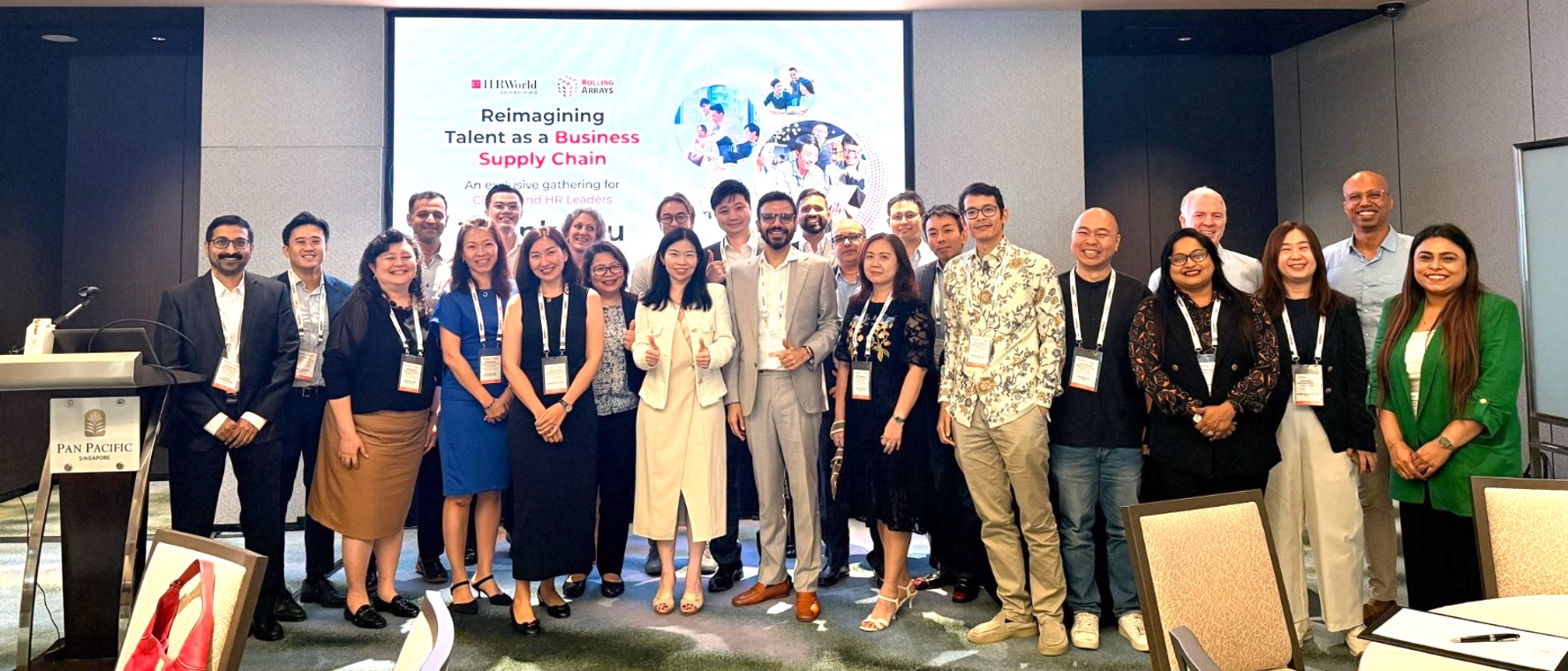 Singapore · Pan Pacific · 29 January 2026
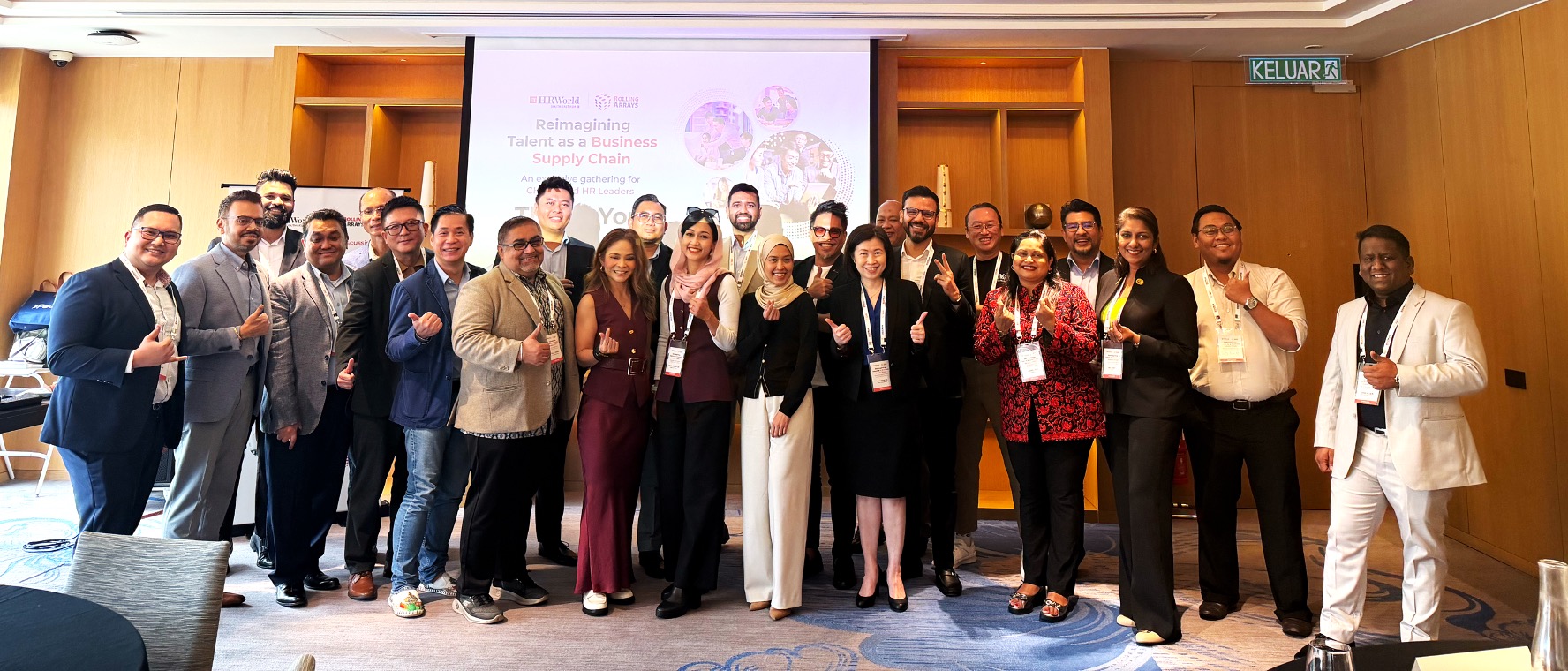 Malaysia · Kuala Lumpur · 29 January 2026
What came out of the room
01The reframe landed first.
Treating talent as a measurable supply chain, rather than a soft people agenda, changed how leaders talked about their own organisations within minutes.
02Two numbers, not a dashboard.
The room kept returning to the same idea: track the share and tenure of high performers in critical roles, and most other arguments resolve themselves.
03The cost of inaction is already paid.
Attrition of top performers, slow exits and inflated ratings are real costs sitting in the business today, whether or not anyone has put a number on them.
04AI needs a frame before a tool.
Appetite for AI in HR is high, but it only pays off once you know which decisions it is meant to improve.
Senior leaders joined from organisations including
AirAsiaGrabCitiStandard CharteredTemasekP&GChubbBPMalaysia Airports
AirAsiaGrabCitiStandard CharteredTemasekP&GChubbBPMalaysia Airports
The R7 Framework
Treat talent like a supply chain. Measure it like one.
A supply chain tracks the quality of what enters, how much converts at each stage, and how much of the highest value is kept. The R7 Framework applies that logic to people, across seven stages where talent quality is won or lost. Hover a stage for the question it asks.
What share of new hires become high performers within twelve months?
R1
Recruit
Are our performance ratings accurate, or quietly inflated?
R2
Rate
Are we keeping our best people, or losing them first?
R3
Retain
Are the right people in the roles where they create the most value?
R4
Redeploy
Are we turning solid performers into exceptional ones?
R5
Redevelop
How long do chronic underperformers stay before we act?
R6
Release
Are we tapping our best alumni, or losing them for good?
R7
Rehire
Board metric 01
The share of high performers in your critical roles
Roughly fifteen percent of roles create most of the enterprise value. What percentage of them are held by people who consistently exceed expectations?
Board metric 02
How long those high performers stay
A great hire in a critical role only compounds if they remain. The tenure of your A-Players in the roles that matter most is the second number that moves everything else.
Session 02 · The Human Line Now
Every job in your company is about to divide in two. Where you draw the line decides what stays human.
The Human Line is that boundary, the line you draw through the work as it re-divides between people and agents. The routine execution can move to agents: software for cognitive work, robots for physical. What is left is the judgment, the relationships and the accountability. Draw the line on purpose, not by default, and the capabilities that create your value stay on the human side.
All work, split three ways
Agents
Execution
The routine doing
Gathering, drafting, compiling, reconciling, monitoring. Most of the work, in most roles. This is what agents are built for, with a person watching.
Human
Judgment
Deciding what is worth doing
The trade-offs. The calls that do not fit the playbook. Where value is designed rather than processed. This stays human.
Human
Trust
Owning the outcome
Holding the client’s confidence, being accountable when it breaks, signing your name to the result. This stays human longest.
Agents take the execution. People keep the judgment and the trust, and get the freed hours back for more of it. The role is redesigned, not removed. It moves up.
What the roundtable explores
01
The gap
Who owns the largest line on your P&L? Not the CEO, not the CFO, not the line managers. Collectively, nobody.
02
The rule
What should never be given to an agent, no matter how capable it gets?
03
The trap
Is there work where AI is genuinely better, and still wrong to automate?
04
The people
When a role re-divides between humans and agents, what exactly stays human for your juniors, your mid-level, your seniors?
05
The money
Why do most enterprise AI pilots return nothing, and what do the few that earn do differently?
06
The fit
Once the role is redesigned, who will succeed in it? Human-to-Role Fitment, measured.
The Human Line is the theme of Roundtables 3 and 4, explored live with ETHRWorld Southeast Asia.
The full 2026 series · Six roundtables and the finale
Six roundtables. Two cities. One finale.
Each roundtable is one table of twenty, selected by profile. The series runs from the opening supply-chain sessions, through the Human Line, to the next five years of HR, and closes with the R7 Gala and a coffee table book launch.
Completed · Jan
R7 Roundtable 1
Reimagining Talent as a Supply Chain
Completed · Jan
R7 Roundtable 2
Reimagining Talent as a Supply Chain
28 Jul
R7 Roundtable 3
The Human Line
30 Jul
R7 Roundtable 4
The Human Line
TBC in Sep
R7 Roundtable 5
How might HR look, five years from now?
2 Sep
R7 Roundtable 6
How might HR look, five years from now?
★ Featuring
Prof. Felix Oberholzer-Gee
In person. Andreas Andresen Professor of Business Administration, Harvard Business School, and academic advisor to the R7 Framework research.
Oct · TBD
R7 Gala Night
Coffee table book launch
The Finale
The R7 Gala, and the book that names the leaders.
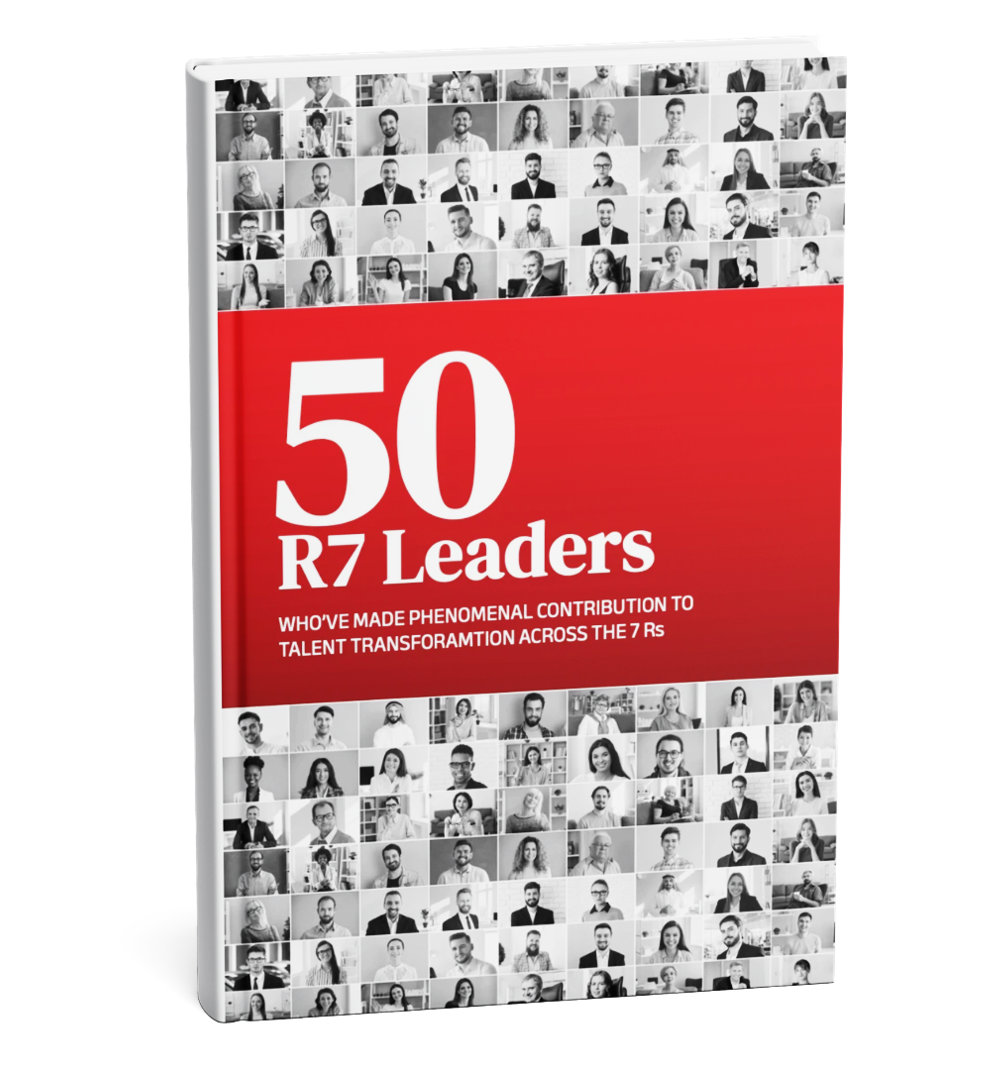
The series closes with the R7 Gala, an evening that brings the year’s rooms together and honours the leaders behind the results. At its centre is a launch, a coffee table book featuring the region’s most influential people and business leaders, and the ideas redefining talent transformation.
- Recognising leaders who moved real numbers across the seven R’s
- The R7 Leaders coffee table book, celebrating phenomenal work in the R7 domains
- The defining ideas and results from the 2026 R7 series, in print
October 2026 · Date to be confirmed
Express interest
There is a place at this table for you.
Tell us a little about yourself and we will be in touch about the edition that fits, in Singapore or Malaysia.