Resources > Blog >Why Boards Need Outcome Metrics Instead of Activity Metrics in HR Transformation
Why Boards Need Outcome Metrics Instead of Activity Metrics in HR Transformation
July 14, 2026
Overview
HR dashboards generate more data than ever before, yet many executive teams still struggle to understand whether HR transformation is delivering measurable business value. While activity metrics help HR teams monitor day to day operations, boards and executive leaders look for evidence that transformation is improving workforce performance, supporting business growth, and generating return on investment. This article explores the difference between activity metrics and outcome metrics, explains why the distinction matters at the executive level, and highlights the measures organizations should prioritize to demonstrate long term business impact.
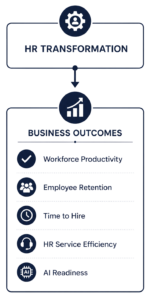
Why Boards Read Business Outcomes, Not Activity Reports
Modern HR platforms generate hundreds of metrics, from training completion rates and system logins to workflow approvals and helpdesk tickets. These measures help HR teams monitor daily operations, but they rarely answer the questions that matter most to executive leadership.
Boards evaluate transformation differently. They want to understand whether investments are improving business performance, strengthening workforce capabilities, and supporting long term organizational growth.
- Has workforce productivity improved?
- Are we retaining critical talent?
- Has hiring become faster and more effective?
- Do we have reliable workforce data for strategic decisions?
- Is our HR transformation delivering measurable business value?
This shift reflects a broader change in how organizations evaluate transformation success. The Josh Bersin Company’s long-standing HR maturity research describes this same progression: organizations move from a tactical, activity-focused HR function toward one that demonstrates measurable, strategic business value as it matures.
Activity Metrics vs Outcome Metrics
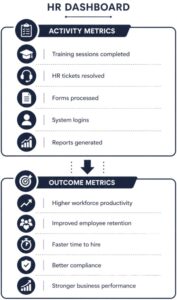
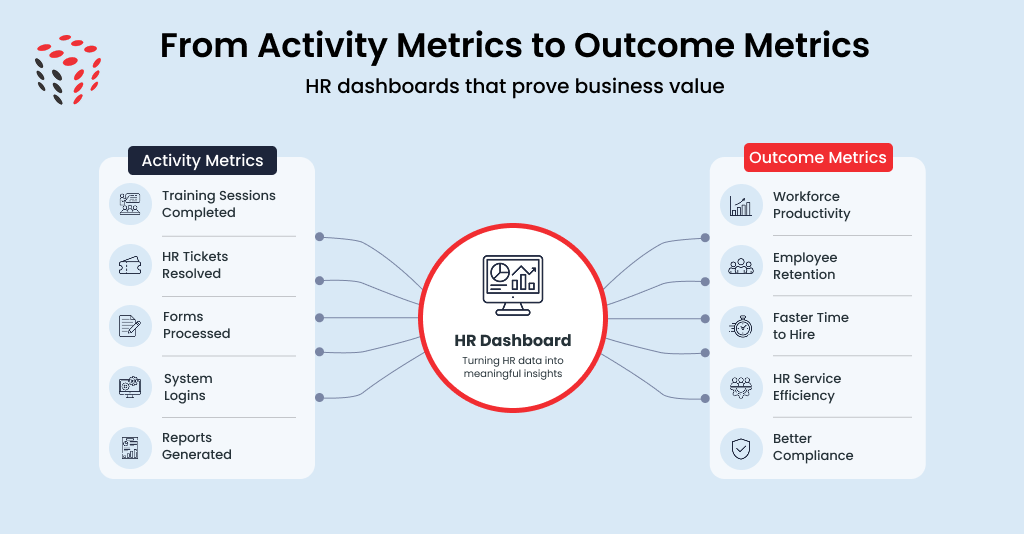
Activity Metrics Measure Work. Outcome Metrics Measure Value.
Activity metrics help HR teams understand what work has been completed. Outcome metrics demonstrate whether that work has created measurable business value.
Both types of metrics play an important role, but they serve different audiences. HR teams rely on activity metrics to manage operations, while executive leaders depend on outcome metrics to evaluate strategic investments and guide business decisions.
Activity metrics include the number of training sessions, HR tickets resolved, performance reviews completed, system usage, and forms processed. In contrast, outcome metrics focus on the results achieved, such as improved workforce productivity, higher employee satisfaction, better employee retention, increased platform adoption, and faster HR service delivery.
Organizations that balance both types of metrics create dashboards that support operational excellence while demonstrating measurable business impact.
Why Traditional HR Dashboards Fall Short
Many HR dashboards contain extensive operational data but provide limited insight into business performance. As a result, executive teams often struggle to connect HR activities with organizational outcomes.
- Reporting large volumes of operational data without business context
- Tracking activities instead of measurable outcomes
- Presenting metrics that do not support executive decision making
- Failing to demonstrate the return on HR transformation investments
- Overlooking workforce trends that influence future business performance
When dashboards focus primarily on activities, they answer what happened but rarely explain why it matters.
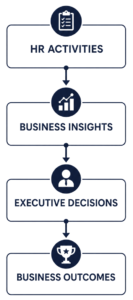
From HR Data to Executive Decisions
Why Traditional HR Dashboards Fall Short
Many HR dashboards contain extensive operational data but provide limited insight into business performance. As a result, executive teams often struggle to connect HR activities with organizational outcomes.
- Reporting large volumes of operational data without business context
- Tracking activities instead of measurable outcomes
- Presenting metrics that do not support executive decision making
- Failing to demonstrate the return on HR transformation investments
- Overlooking workforce trends that influence future business performance
When dashboards focus primarily on activities, they answer what happened but rarely explain why it matters.
What Boards Really Want to Measure
Building a Dashboard That Supports Executive Decisions
An effective HR dashboard should do more than display operational data. It should help leaders understand trends, identify risks, and make informed business decisions.
- How many employees completed training?
- How many workflows were processed?
- How many HR tickets were closed?
Leadership teams should ask:
- Has employee productivity improved?
- Are managers making faster workforce decisions?
- Is employee retention improving?
- Has HR reduced manual effort?
- Is the organization becoming more prepared for AI enabled workforce management?
When dashboards answer these questions, they become valuable decision making tools rather than reporting tools.
Activity Metrics vs Outcome Metrics at a Glance
Activity metrics focus on monitoring operations, are primarily used by HR teams, and generally measure short-term performance. For example, they track training sessions completed and provide operational visibility. Outcome metrics, on the other hand, focus on measuring business value, are intended for executive leadership and the board, and take a long-term view. They emphasize outcomes such as improved workforce productivity and support strategic decision-making.
Organizations need both types of metrics, but executive dashboards should place greater emphasis on business outcomes.
From Reporting to Business Intelligence
As organizations embrace AI first business strategies, HR dashboards are evolving from reporting tools into decision support platforms.
Modern HR leaders increasingly use workforce analytics to:
- Identify workforce trends before they affect business performance
- Support strategic workforce planning
- Improve talent retention
- Strengthen compliance and governance
- Enable AI driven workforce insights
The value of an HR dashboard no longer depends on how much information it contains. It depends on how effectively it helps leaders make better decisions.
Conclusion
HR transformation generates significant amounts of operational data, but data alone does not demonstrate business value. Executive teams need dashboards that connect HR performance with organizational outcomes.
By shifting the focus from activity metrics to outcome metrics, organizations can better demonstrate the impact of HR transformation, strengthen executive confidence, and make more informed business decisions. The most effective dashboards do not simply report what HR has accomplished. They show how HR contributes to workforce performance, organizational resilience, and long term business growth.
FAQ
What is the difference between activity metrics and outcome metrics?
MActivity metrics measure operational tasks, such as training sessions completed or HR tickets resolved. Outcome metrics measure the business impact of those activities, including workforce productivity, employee retention, and HR service efficiency.
Why do boards prefer outcome metrics?
Boards focus on business performance and return on investment. Outcome metrics demonstrate whether HR transformation supports organizational goals and creates measurable business value.
What are the most important HR outcome metrics?
Common outcome metrics include workforce productivity, employee retention, time to hire, HR service efficiency, compliance, and AI readiness.
How do outcome metrics support AI in HR?
Outcome metrics rely on trusted workforce data, standardized processes, and governance. These capabilities also create the foundation for AI driven analytics, automation, and strategic workforce planning.




Share with your network
Get updates in your inbox