

Resources > Blog >Why It Is Better for DMS to Maintain HRMS as a Single Source of Truth
Why It Is Better for DMS to Maintain HRMS as a Single Source of Truth
In modern HR management, the document management system (DMS) plays a crucial role in organizing, managing, and ensuring the security of HR-related documents. However, many organizations face the temptation to duplicate documents across multiple storage platforms, such as SAP and third-party DMS. While this might seem like a solution to enhance flexibility, it introduces several inefficiencies and vulnerabilities that could ultimately compromise both operational efficiency and data security. Below, we explore why maintaining a single source of truth within the HRMS core module is not only more efficient but also crucial for security.
Security: The Crucial Concern in Today’s Digital Landscape
How SAP Protects Sensitive HR Documents
In an era where cybercrime and data breaches are becoming more sophisticated and widespread, security must be the top priority for any document storage strategy. SAP SuccessFactors, as an enterprise-grade system, offers robust security features that are critical for managing sensitive HR documents, such as employee records, compensation details, and performance evaluations.
By storing all documents in SAP, HR departments can leverage SAP’s built-in security features—including encryption, role-based access control, audit logs, and user authentication protocols—to safeguard confidential data. These measures ensure that only authorized users can access sensitive documents, providing a high level of protection against unauthorized access and cyber threats.
Risks of Third-Party Document Storage
In contrast, storing documents in third-party systems exposes HR data to potential security risks. Many third-party systems may not have the same level of security infrastructure as SAP, making them more vulnerable to hacking, data breaches, and internal threats.
In many cases, these third-party systems do not comply with the stringent data protection regulations required for storing sensitive information, such as the GDPR in Europe or other regional data protection laws. This compliance gap exposes the organization to potential legal liabilities and reputational damage in the event of a breach.
By centralizing document storage in SAP, companies benefit from SAP’s rigorous security standards, which are designed to meet the highest levels of compliance and data protection, ensuring that sensitive HR data remains secure and protected from unauthorized access or theft.
Duplication of Documents: Which Version is Correct?
Risks of Conflicting HR Data
One of the most significant issues when storing documents in multiple systems is the duplication of data. A document might exist in both SAP and DMS, creating confusion about which version is the correct or most up-to-date one. HR teams are then forced to spend time cross-referencing documents across systems, increasing the risk of errors.
The key question here is: What happens when there is conflicting information across platforms? Without a clear, single source of truth, HR professionals are left to reconcile these discrepancies manually. This process is not only time-consuming but also increases the risk of human error—for example, working with outdated or inaccurate documents, which could lead to compliance issues or poor decision-making.
Benefits of Centralized Document Management
By maintaining documents in SAP, the organization ensures that only the most current and accurate version of any document is available, reducing the risk of discrepancies and improving operational efficiency. This centralization also means that the risk of inadvertently working with duplicate or outdated data is minimized, creating a much more reliable document management environment.
Outcome – No Real Difference Other Than Storage Cost
Hidden Costs of Document Duplication
The ultimate outcome of storing documents across multiple systems is often a lack of meaningful improvement in processes, with the primary difference being an increase in storage costs. In fact, rather than improving workflow or operational efficiency, this duplication of documents creates more challenges—longer retrieval times, increased risk of errors, and more complex workflows.
Efficiency Gains with Single Source of Truth
By contrast, maintaining a single source of truth in SAP not only simplifies document management but also enhances security, improves process efficiency, and ensures that the organization is well-protected against the risks of cybercrime and data breaches.
ePFile’s System Architecture
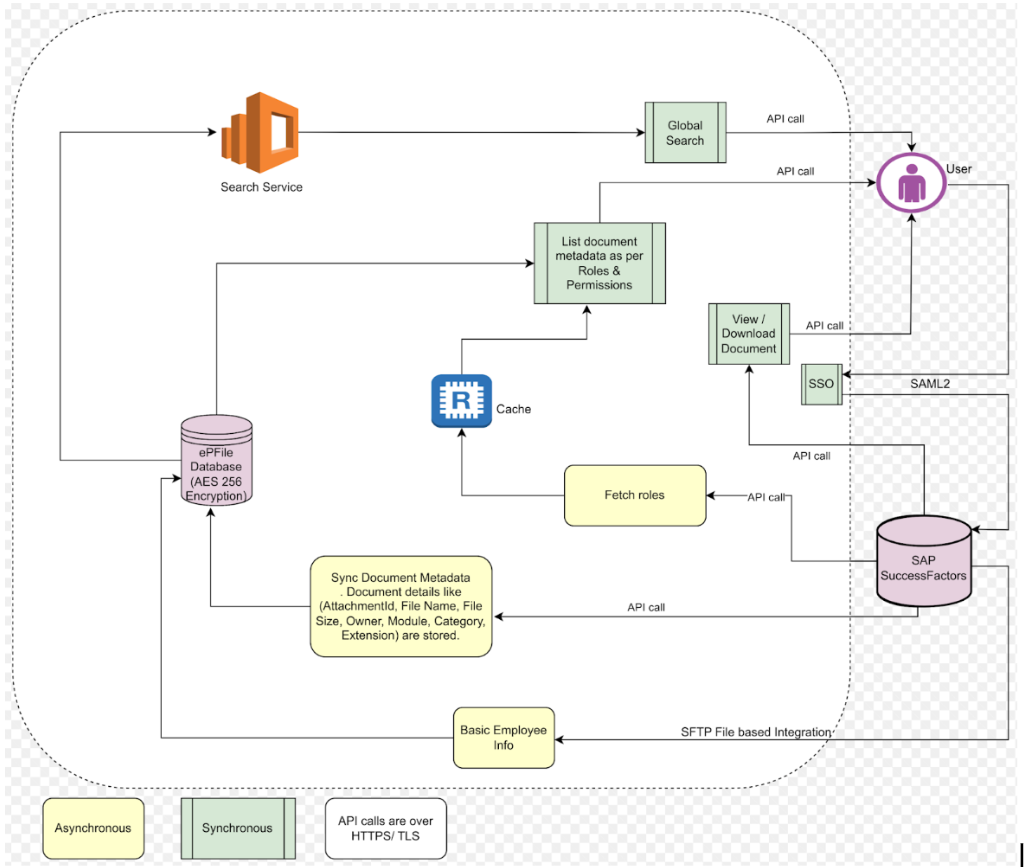
- Documents are always stored in SAP SuccessFactors and pulled to ePFile in real time only when required.
- Minimal employee and file metadata stored in ePFile.
- Data is always encrypted at rest and while in transit.
- Single Sign-On (SSO) is supported and user credential management is not done in ePFile.
- All data is managed via Role-Based Permissions (RBP)
Other SAP SuccessFactors add-ons:
Learn more about REO, ReeCollect, Renefits, ReeCap, Reimburse, and LSYNC to streamline HR processes and enhance operational efficiency.
Conclusion
The importance of security in today’s digital landscape cannot be overstated. Storing documents in SAP SuccessFactors offers a level of security, reliability, and compliance that third-party systems cannot match. By centralizing document management in SAP, HR teams can significantly reduce the risk of data breaches, inconsistencies, and inefficiencies.
Duplicating documents across multiple platforms introduces unnecessary complexity and security vulnerabilities, with minimal benefits. Instead, by maintaining a single source of truth within the SAP system, organizations can ensure a more secure, efficient, and streamlined approach to document management, protecting sensitive HR data while enhancing overall operational effectiveness.



Share with your network
Get updates in your inbox