Table of Contents
- Why Is Performance Calibration Important in Talent Management?
- How Can Organisations Identify A Players Through Performance Calibration?
- What Should a Consistent Talent Review Process Include?
- How Can Organisations Reduce Bias During Performance Calibration?
- How Can Talent Intelligence Software Support Better Calibration?
- How Can Organisations Measure the Effectiveness of Performance Calibration?
- How Does Performance Calibration Create Business Value?
- Frequently Asked Questions
Resources > Blog > How to Identify A Players Through Consistent Performance Calibration
How to Identify A Players Through Consistent Performance Calibration
November 09, 2026
Why Is Performance Calibration Important in Talent Management?
One manager may award a high rating for meeting objectives consistently, while another reserves the same rating for exceptional contribution. Some managers may assess employees against measurable outcomes, while others give greater weight to visibility, confidence or personal relationships.
These differences make it difficult for leadership teams to identify A Players consistently across the organisation.
Performance calibration in talent management creates a structured discussion in which managers review assessments against shared expectations. The objective is not to force employees into predetermined rating categories. It is to improve the consistency, evidence and quality of decisions.
For enterprise leaders, effective calibration helps answer a critical question: which employees consistently deliver the contribution the business needs, and where can their capabilities create the greatest value?
How Can Organisations Identify A Players Through Performance Calibration?
Examine Evidence of Sustained Performance
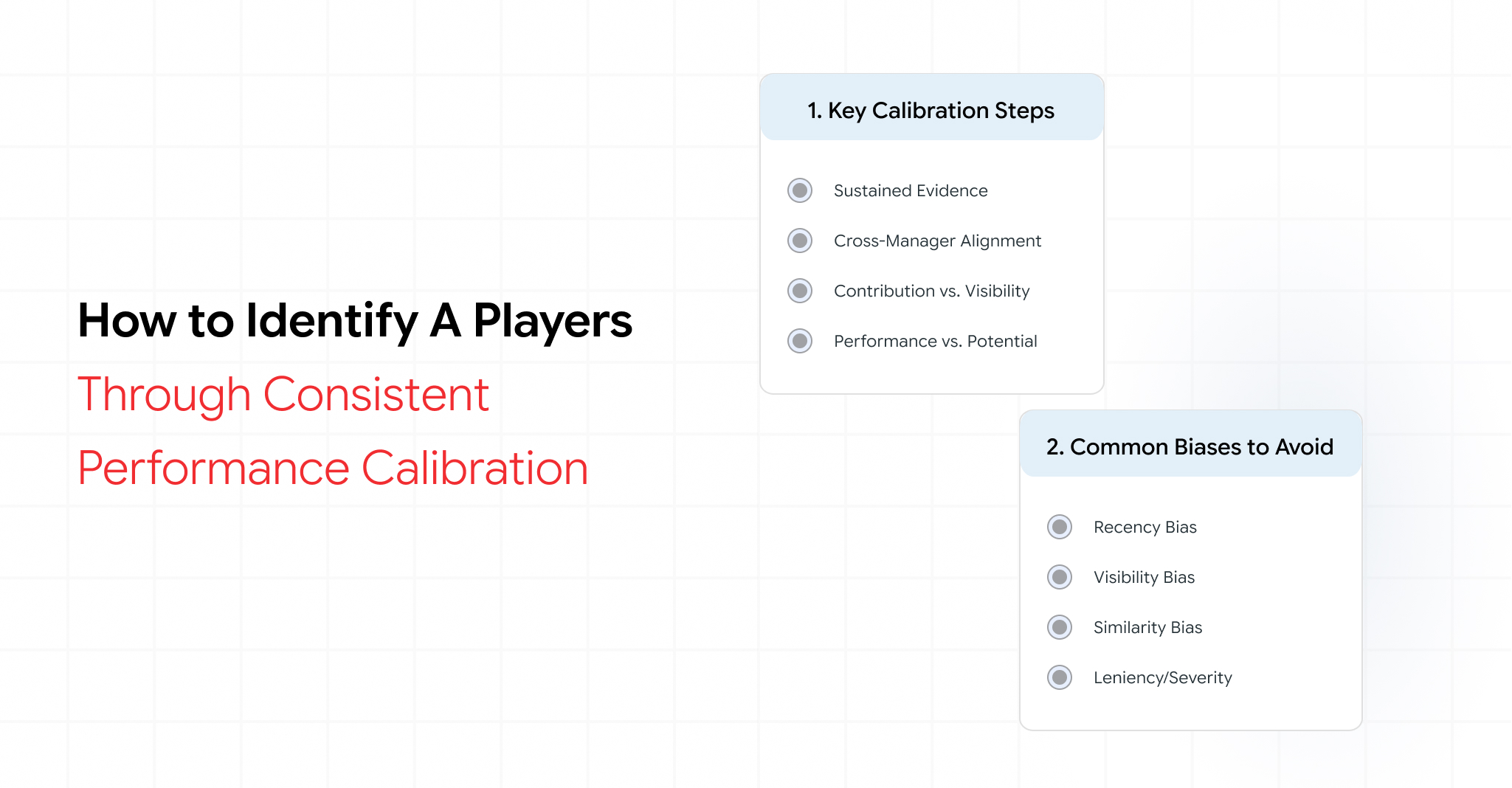
Review performance across multiple assessment periods rather than relying on a single review cycle. Look for consistent achievement of relevant objectives, work quality, reliability and contribution to team or business outcomes.
A temporary success may demonstrate potential, but sustained evidence provides a stronger basis for identifying consistently high performers.
Organisations should also evaluate performance against clearly defined role expectations. A role-based employee performance assessment approach helps leaders understand how individual contributions align with specific business requirements.
Compare Assessments Across Managers
Calibration discussions help identify where managers apply different standards to similar performance. Ask managers to explain the evidence behind ratings and examine whether comparable contributions receive comparable assessments.
Differences should prompt investigation, not automatic rating changes. Employees may work under different conditions, manage different levels of complexity or face different business constraints.
Distinguish Individual Contribution from Visibility
Employees who regularly present to senior leaders or work on high profile projects may receive greater recognition than those who deliver equally valuable results behind the scenes.
A consistent talent review process examines actual contribution, not just visibility. It should consider role relevant outcomes, collaboration, problem solving and the impact of work on business priorities.
Separate Current Performance from Future Potential
Strong current performance does not automatically indicate readiness for a larger role. Equally, an employee who has not yet reached the highest performance level may demonstrate the capability to grow.
Calibration should distinguish demonstrated contribution from future potential and readiness for expanded responsibilities. This helps organisations avoid treating all three as interchangeable judgments.
What Should a Consistent Talent Review Process Include?
Organisations can strengthen the process through the following practices:
- Establish shared standards: Define what strong contribution looks like for relevant roles and business functions before review discussions begin.
- Require supporting evidence: Ask managers to connect ratings with objectives, outcomes, examples and relevant performance information.
- Review differences constructively: Investigate rating patterns across teams, functions and managers without assuming that every difference reflects bias.
- Document decisions: Record the rationale behind rating adjustments, development priorities and succession recommendations.
- Agree on follow up actions: Translate calibration outcomes into development plans, retention priorities, succession discussions or further assessment where appropriate.
These practices make employee performance evaluation more consistent without removing managerial judgment. Managers still need to interpret performance in context, but they should explain their decisions against common expectations.
How Can Organisations Reduce Bias During Performance Calibration?
Organisations should actively examine several risks:
- Recency bias: Giving excessive weight to recent events instead of the full review period.
- Visibility bias: Overvaluing employees whose work receives greater attention.
- Similarity bias: Favouring employees whose communication styles or backgrounds resemble those of their managers.
- Leniency and severity differences: Applying unusually generous or strict ratings compared with other managers.
- Outcome bias: Judging an employee solely by a business result without considering role expectations, resources or external conditions.
Useful performance management best practices include reviewing evidence before group discussions, asking managers to justify significant rating differences, tracking recurring patterns and allowing employees to provide relevant context through established review processes.
The goal is a fairer and more defensible assessment process, not identical ratings for every team.
How Can Talent Intelligence Software Support Better Calibration?
Talent intelligence software can help bring relevant workforce information together, allowing leaders to examine capabilities, identify skill gaps and understand where talent may support future business requirements.
However, technology should support rather than replace calibration. Performance ratings still require context, informed judgment and accountable decisions. Organisations should also consider data quality, access controls and the limitations of automated recommendations.
Explore Rolling Arrays’ resource on
rollingarrays.com
to learn more about the technology landscape.
How Can Organisations Measure the Effectiveness of Performance Calibration?
Useful indicators include:
- Consistency of rating patterns across comparable teams and roles.
- Frequency and rationale of rating changes following calibration.
- Representation of employees in promotion and succession discussions.
- Follow through on development actions agreed during talent reviews.
- Retention and progression of identified high performers.
- Evidence that talent decisions align with business priorities and critical capability needs.
These indicators should be interpreted carefully. For example, retaining a high performer does not prove that calibration caused the outcome. Organisations should review patterns over time and consider other factors influencing performance, promotion and retention.
How Does Performance Calibration Create Business Value?
It also helps organisations recognise valuable contributions that might otherwise receive inconsistent attention across departments.
For Rolling Arrays, effective talent management begins with connecting workforce decisions to business requirements. Performance calibration provides one way to strengthen that connection by helping leadership teams build a more consistent understanding of employee contribution and capability.
The objective is not simply to assign ratings. It is to make better decisions about how the organisation recognises, develops and deploys its talent.
Ready to Strengthen Your Talent Management Strategy?
Connect your HR strategy, processes and technology to make more informed workforce decisions.
FAQ
What is performance calibration?
Performance calibration is a structured process in which managers review employee assessments against shared expectations to improve consistency and the quality of talent decisions.
How does performance calibration help identify A Players?
It helps leaders compare evidence of sustained contribution across teams, examine differences in manager ratings and identify employees whose performance consistently aligns with business needs.
How often should organisations conduct performance calibration?
Many organisations align calibration with their formal performance review cycle. Additional discussions may be useful before promotion, succession or other significant talent decisions, depending on business needs.
Does performance calibration eliminate manager bias?
No. Calibration can expose inconsistent standards and challenge unsupported judgments, but it requires reliable evidence, clear criteria and active oversight to reduce bias.
What is the difference between performance calibration and a talent review?
Performance calibration focuses on improving the consistency of performance assessments. A broader talent review may also examine potential, succession readiness, development needs and future workforce requirements.
Can talent intelligence software replace performance calibration meetings?
No. Talent intelligence software can organise workforce information and support analysis, but leaders still need contextual discussion, human judgment and clear accountability for talent decisions.
Share with your network