
Table of Contents
- Success Begins Long Before the System Goes Live
- Why Many HR Transformations Lose Momentum After the First Year
- Decision One: Define Business Outcomes Before Technology Selection
- Decision Two: Build Governance Before Configuration
- Decision Three: Make Organizational Adoption Part of the Strategy
- Five Warning Signs That Predict Transformation Challenges
- Building a Strategy That Delivers Lasting Business Value
- Measuring Success Beyond Implementation
Resources > Blog >Why HR Transformations Stall in Year Two and the Three Decisions That Predict Success in Week One
Why HR Transformations Stall in Year Two and the Three Decisions That Predict Success in Week One
June 18, 2026
Overview
Organizations invest heavily in HR transformation to improve operational efficiency, enhance employee experiences, and support long term business growth. Yet many initiatives lose momentum after the first year, limiting the value organizations expect from their investment. While technology often receives the blame, the real reasons typically lie in the strategic decisions made at the start of the transformation journey. This article explores why HR transformations stall over time, identifies the early warning signs leaders should watch for, and examines the three critical decisions that help organizations sustain momentum and achieve long term business outcomes.
Success Begins Long Before the System Goes Live
Many organizations view the implementation of a new HR platform as the finish line. Teams spend months selecting technology, redesigning processes, migrating data, and preparing employees for the transition. Once the system goes live, attention often shifts to other business priorities.
However, implementation is only one milestone in a much larger transformation journey. Organizations create lasting value only when employees consistently adopt new ways of working, leaders make better workforce decisions, and HR processes continue to evolve alongside business needs.
Many organizations discover a different reality after go live. The technology functions as expected, but employees continue using spreadsheets, reporting becomes inconsistent, and familiar manual processes return. Business leaders then begin questioning whether the transformation delivered the expected business value.
The difference is simple. Technology enables transformation, but leadership, governance, and adoption determine whether transformation succeeds.
Implementation vs. Transformation
- System goes live on schedule.
- Data is successfully migrated.
- Processes are configured.
- Users receive training.
- Project closes successfully.
Transformation success
- Employees adopt new ways of working.
- Leaders use trusted workforce data for decisions.
- Business processes continuously improve.
- Employees consistently use the platform.
- Business outcomes continue to improve.
Why Many HR Transformations Lose Momentum After the First Year
The first year of an HR transformation usually benefits from strong executive sponsorship, structured governance, and clear implementation milestones. Leadership remains actively involved, project teams collaborate closely, and organizations focus on delivering a successful go live.
Momentum often changes after implementation. Executive attention shifts to new priorities, governance becomes less structured, and departments gradually introduce exceptions to established processes. Over time, these small changes reduce process consistency and encourage employees to return to familiar ways of working.
- Reduced confidence in workforce data.
- Increased manual effort across HR operations.
- Inconsistent reporting and decision making.
- Lower employee adoption of the new platform.
- Reduced return on technology investment.
The second year therefore becomes the real measure of transformation success. It determines whether the organization has fundamentally changed the way it manages its workforce or simply replaced one HR system with another.
Decision One: Define Business Outcomes Before Technology Selection
Many organizations begin HR transformation by evaluating software capabilities, implementation timelines, and vendor demonstrations. While these activities are important, they should support the strategy rather than define it.
Successful organizations first identify the business outcomes they want to achieve. Executive teams should align around measurable objectives before selecting technology or redesigning processes.
- Improving workforce productivity.
- Reducing manual HR effort.
- Strengthening compliance and governance.
- Increasing employee retention.
- Improving workforce planning and reporting.
- Building an AI ready HR operating model.
When organizations define business outcomes first, every subsequent decision—from technology selection to governance and reporting—supports measurable business value.
Organizations that skip this step often configure technology around existing processes instead of redesigning those processes for future business needs. As a result, they improve efficiency without achieving meaningful business transformation.
Decision Two: Build Governance Before Configuration
Many organizations associate governance with project management. In reality, governance shapes every major transformation decision. It defines how decisions are made, who owns critical processes, and how the programme stays aligned with business objectives throughout its lifecycle.
Without a clear governance framework, transformation programmes quickly become difficult to manage. Stakeholders introduce new requirements, departments request local process variations, and customization increases. Over time, these decisions reduce standardization and make the platform more complex to maintain.
- Define clear ownership and accountability.
- Evaluate every decision against business objectives.
- Control unnecessary customization.
- Maintain standardized HR processes across business units.
- Respond to changing business priorities without losing momentum.
Governance With and Without a Defined Framework
- Clear decision ownership
- Standardized processes
- Controlled customization
- Consistent executive sponsorship
- Long term scalability
Without strong governance
- Unclear accountability
- Multiple process variations
- Increasing system complexity
- Conflicting stakeholder priorities
- Higher maintenance and operational costs
Organizations that establish governance before system configuration create a stronger foundation for sustainable HR transformation and long term business value.
Organizations that establish governance before system configuration create a stronger foundation for sustainable HR transformation and long term business value.
Decision Three: Make Organizational Adoption Part of the Strategy
Organizations often treat user adoption as the final activity before go live. Successful HR transformations take a different approach. They make adoption a strategic priority from the beginning of the programme.
Employees and managers need more than system training. They need to understand why the transformation matters, how it supports business goals, and what changes they should expect in their day to day work.
- Early and consistent communication.
- Role based training programmes.
- Leadership engagement throughout the transformation.
- Continuous feedback and user support.
- Ongoing measurement of platform adoption and usage.
According to Deloitte, organizations that invest in structured change management are significantly more likely to achieve their transformation objectives because employees adopt new ways of working more quickly and consistently.
When organizations embed adoption into the overall transformation strategy, they improve data quality, increase user confidence, and maximize the long term value of their HR technology investment.
Five Warning Signs That Predict Transformation Challenges
Most HR transformation initiatives do not lose momentum overnight. Early warning signs usually appear months before business outcomes begin to decline. According to McKinsey, organizations that continuously monitor transformation progress and maintain strong executive sponsorship are significantly more likely to achieve their intended business outcomes.
- Declining executive engagement: Steering committee meetings become less frequent, executive sponsorship weakens, and leadership attention shifts to other business priorities.
- Growing dependence on manual workarounds: Employees continue using spreadsheets, email approvals, or offline reports because they find existing processes easier than the new system.
- Inconsistent workforce data: Different departments report different headcount figures or business metrics, reducing confidence in workforce insights and decision making.
- Increasing process variation: Business units introduce local process exceptions that reduce standardization, complicate reporting, and increase operational complexity.
- Technology discussions replace business outcomes: Conversations focus primarily on system enhancements and feature requests instead of workforce productivity, employee experience, compliance, or business performance.
Organizations that identify these warning signs early can strengthen governance, improve adoption, and realign the transformation with long term business objectives before momentum begins to decline.
Building a Strategy That Delivers Lasting Business Value
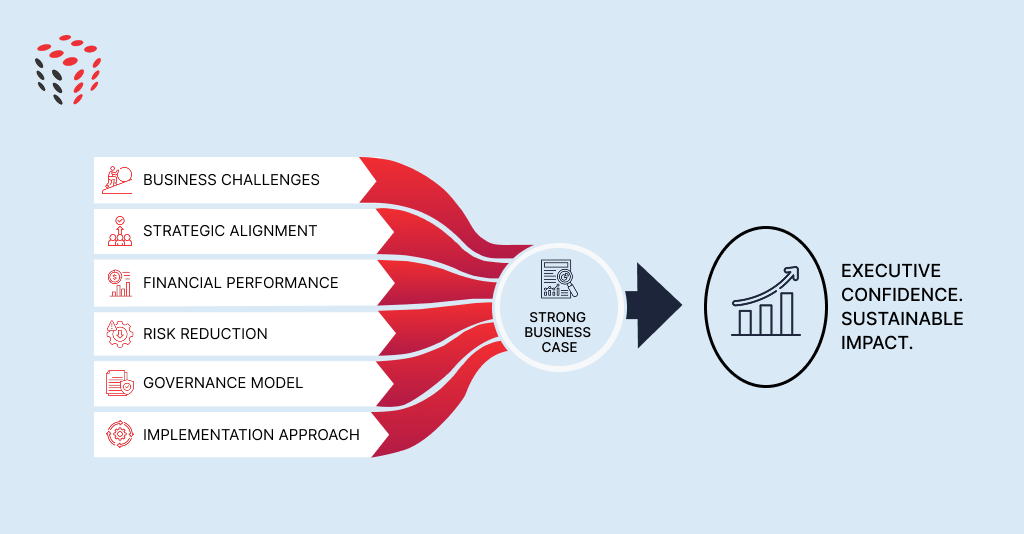
A successful HR transformation strategy extends far beyond implementation. It creates a long term operating model that enables organizations to adapt to changing workforce expectations, evolving business priorities, and emerging technologies, including AI enabled workforce management.
- Define clear business outcomes before implementation.
- Redesign processes to support future business needs.
- Establish governance that drives consistency and accountability.
- Invest in continuous change management and user adoption.
- Measure business outcomes and refine processes over time.
When these priorities work together, HR transformation becomes an ongoing business capability rather than a one time technology initiative.
Measuring Success Beyond Implementation
A successful HR transformation strategy extends far beyond implementation. It creates a long term operating model that enables organizations to adapt to changing workforce expectations, evolving business priorities, and emerging technologies, including AI enabled workforce management.
Key performance indicators include:
Key measures include:
- Workforce productivity: Reduced administrative effort
- Talent acquisition: Faster time to hire.
- Employee experience: Higher engagement and retention.
- Data quality: Improved confidence in workforce reporting.
- Compliance: Fewer audit findings and policy exceptions.
- Platform adoption: Increased usage of digital HR processes
Regularly reviewing these measures helps organizations identify improvement opportunities and ensure the transformation remains aligned with changing business priorities.
Regularly reviewing these measures helps organizations identify improvement opportunities and ensure the transformation remains aligned with changing business priorities.
Conclusion
HR transformation succeeds because of strategic decisions, not technology alone. Organizations that define clear business outcomes, establish strong governance, and prioritize continuous adoption build a stronger foundation for long term business success.
Rather than viewing implementation as the finish line, organizations should treat it as the beginning of continuous improvement. The second year of transformation often reveals whether new ways of working have become part of everyday operations or whether old habits have returned.
Organizations that continuously measure business outcomes, strengthen governance, and improve adoption are better positioned to maximize the value of their HR transformation investment.
About Rolling Arrays
For over 16 years, Rolling Arrays has helped enterprises across Asia navigate complex HR transformation initiatives by aligning people, processes, and technology with business strategy. Through deep expertise in HR consulting, HR technology implementation, change management, and optimization, we help organizations build future ready HR operating models that deliver measurable and sustainable business value.
FAQ
Why do many HR transformations lose momentum after the first year?
Many organizations focus primarily on implementation while giving less attention to governance, organizational adoption, and continuous improvement. Without these elements, business value becomes difficult to sustain after the project is complete.
What is an effective HR transformation strategy?
An effective strategy aligns business objectives, process improvement, governance, technology, and organizational adoption to create long term business value.
What are the biggest HR transformation challenges?
Common challenges include fragmented workforce data, inconsistent processes, low user adoption, limited executive sponsorship, and difficulty measuring business outcomes after implementation.
How can organizations build a successful HR transformation roadmap?
A successful roadmap begins with defining business objectives, followed by process redesign, governance, technology implementation, adoption planning, and continuous optimisation.
How should executives measure the success of an HR transformation?
Executives should focus on outcomes such as workforce productivity, employee retention, hiring efficiency, compliance, data quality, and user adoption rather than implementation milestones alone.



Share with your network
Get updates in your inbox