Table of Contents
- What Is Cloud HCM Data Residency?
- What Is the Difference Between Data Residency, Data Sovereignty and Data Privacy?
- Do Global Organisations Need to Store Employee Data in Each Country?
- How Do Cross Border Employee Data Transfers Affect Cloud HCM?
- What Should Organisations Evaluate When Selecting a Cloud HCM Provider?
- How Can Organisations Strengthen HR Data Security?
- What Does Employee Data Privacy Require From HR Teams?
- How Should Organisations Establish HR Systems Data Governance?
- How Can Global Organisations Balance Data Residency With HR Transformation?
- Frequently Asked Questions
Resources > Blog > Data Residency, Privacy and Cloud HCM: What Global Organisations Need to Know
Data Residency, Privacy and Cloud HCM: What Global Organisations Need to Know
November 27, 2026
What Is Cloud HCM Data Residency?
For example, an organisation may operate across Singapore, India, Australia and Europe while using one global HCM platform. The platform may store employee records in selected data centres, process information through different services and allow authorised teams in multiple countries to access it.
These activities raise different questions. Where does the system store employee records? Where does it process the information? Can support teams access the data from another country? Where are backups held? Which third parties process the information?
Organisations should distinguish data storage location from data access and processing location. A system may store records in one country while authorised users, support teams or connected applications access information from elsewhere.
Understanding these arrangements is essential when evaluating employee data residency requirements and selecting a cloud HCM deployment model.
What Is the Difference Between Data Residency, Data Sovereignty and Data Privacy?
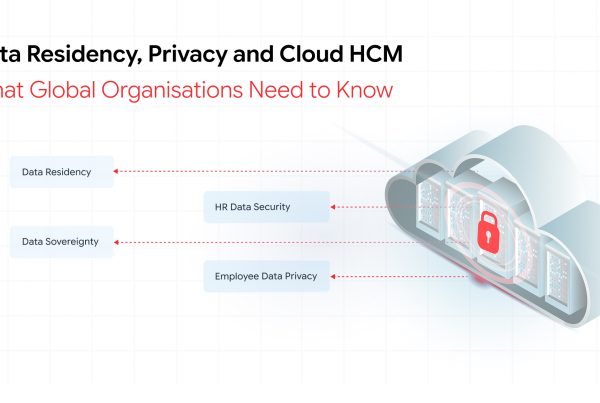
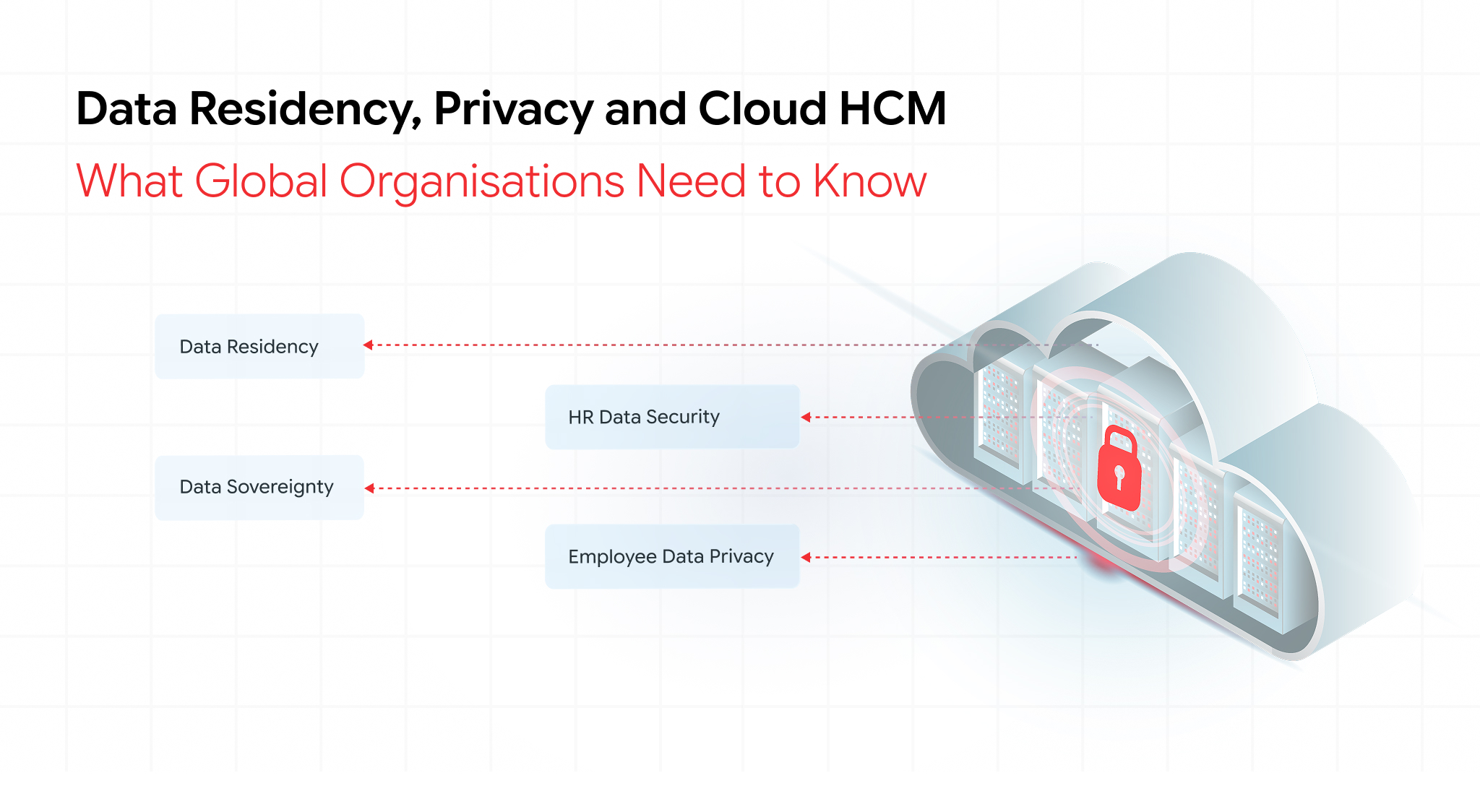
Data residency concerns the geographic location where data is stored or processed. A contract or regulatory requirement may specify where particular information must remain.
Data sovereignty concerns the laws and jurisdictional authority that may apply to data because of its location, the organisations controlling it or the circumstances in which it is accessed. Data stored in a particular country may be subject to relevant local laws, while other legal obligations may also apply.
Employee data privacy concerns how organisations collect, use, share, retain and protect personal information. It includes ensuring that employee data is handled for appropriate purposes and in accordance with applicable legal requirements.
HR data security focuses on protecting information against unauthorised access, disclosure, alteration, loss or destruction. Measures may include encryption, access controls, identity verification, monitoring and incident response.
An organisation can have strong security controls and still fail to meet a privacy obligation. Similarly, storing information locally does not automatically establish compliance with every law that applies to it.
Global HR and IT leaders should assess these dimensions together rather than treating data location as the only compliance consideration.
Do Global Organisations Need to Store Employee Data in Each Country?
Some jurisdictions impose specific localisation requirements on certain categories of data or regulated activities. Others permit international storage and processing when organisations satisfy privacy, transfer and security obligations.
For example, the European Union’s General Data Protection Regulation establishes requirements for international transfers of personal data rather than imposing a universal rule that all employee data must remain within the EU. Singapore’s Personal Data Protection Act includes a transfer limitation obligation for personal data transferred outside Singapore. Australia’s Privacy Act establishes requirements for certain disclosures of personal information to overseas recipients.
These examples illustrate why organisations should not assume that one global rule applies everywhere.
Before selecting a hosting location, organisations should identify the laws that apply to each employee group and data category. They should also check customer commitments, industry requirements, government contracts and any restrictions imposed by local regulators.
The resulting assessment should determine whether data can be stored centrally, whether particular records require local storage, and what safeguards are needed for international access or transfers.
How Do Cross Border Employee Data Transfers Affect Cloud HCM?
A global HCM environment can involve several types of transfer:
- A regional HR team accesses employee records held in another country.
- A cloud provider stores or processes information in an overseas data centre.
- A support team in another jurisdiction investigates a system issue involving employee records.
- An organisation transfers employee information between local entities for legitimate HR administration.
- An integration sends employee data from an HCM platform to payroll, benefits or identity management systems in another country.
Each scenario may raise different legal and operational questions. The relevant rules can depend on whether the activity constitutes a transfer, use or disclosure under the applicable law.
Organisations should map these data flows before implementation. They should identify the information involved, the purpose of each transfer, the receiving entity, the countries involved and the safeguards that apply.
For European personal data, international transfers must satisfy the GDPR’s applicable transfer requirements. Singapore organisations should assess the transfer limitation obligation. Australian organisations should evaluate the requirements that apply to disclosures to overseas recipients.
Organisations should also establish clear processes for HRIS data migration before moving employee information into a new cloud environment.
Official guidance is available from the European Data Protection Board, Singapore’s Personal Data Protection Commission and the Australian Office of the Australian Information Commissioner.
What Should Organisations Evaluate When Selecting a Cloud HCM Provider?
Organisations evaluating enterprise HCM platforms can use this enterprise HR technology selection guide to structure their assessment.
Organisations should ask providers for clear, documented answers to the following questions.
Where Will Employee Data Be Stored and Processed?
Confirm the available hosting regions for production environments, backups and disaster recovery. Ask whether different services use different locations and whether the provider can contractually commit to specific geographic restrictions where required.
Do not rely only on a general statement that a provider supports regional hosting. Confirm which locations apply to the proposed service and configuration.
Who Can Access Employee Information?
Understand how provider employees, support teams, subcontractors and other authorised parties can access data.
Review access approval processes, privileged access controls, logging and restrictions on support access from other jurisdictions.
How Does the Provider Manage International Transfers?
Ask how the provider identifies international transfers, documents the relevant processing arrangements and supports the organisation’s legal obligations.
Where applicable, review contractual data protection terms and the transfer mechanisms or safeguards used for personal information.
What Security Controls Protect the Data?
Assess encryption, identity and access management, monitoring, vulnerability management, incident response, backup protection and recovery procedures.
Technology leaders should also consider the broader security implications of HR software, particularly when evaluating enterprise HR platforms and connected applications.
Request relevant independent assurance reports and security documentation. Confirm that the controls cover the proposed service and its associated components.
What Happens When the Contract Ends?
Understand how the provider returns or deletes employee information, including relevant copies and backups, under the agreed contractual and legal requirements.
Confirm the available export formats, deletion procedures, retention exceptions and evidence of completion.
These questions help organisations evaluate cloud security compliance alongside functionality, cost, integration and long term operating requirements.
How Can Organisations Strengthen HR Data Security?
Apply least privilege access. Give employees, managers, HR teams and administrators access only to the information they need for their responsibilities.
Protect sensitive information. Use appropriate encryption and secure transmission methods, particularly for sensitive employee records and information exchanged between applications.
Monitor access and activity. Maintain suitable logs, investigate unusual access patterns and review privileged accounts regularly.
Manage third parties. Assess cloud providers, implementation partners and subcontractors according to their access, responsibilities and risk exposure.
Prepare for incidents. Define how teams identify, investigate, escalate and report data breaches in accordance with applicable requirements.
Review access when roles change. Update permissions when employees move roles or leave the organisation, and remove access that is no longer required.
Security controls should reflect the sensitivity of the information and the risks associated with the relevant processing activities. Organisations should also verify that the controls operate effectively rather than relying exclusively on provider assurances.
What Does Employee Data Privacy Require From HR Teams?
A sound privacy approach should address several areas.
Purpose and transparency: Explain the purposes for collecting employee information and provide appropriate privacy notices.
Data minimisation: Collect and retain information that is necessary for defined business and legal purposes.
Access and correction: Establish processes for handling applicable employee requests to access or correct personal information.
Retention and deletion: Define how long different categories of employee information should be retained and when deletion or anonymisation is appropriate, subject to legal retention obligations.
Sensitive information: Apply additional safeguards where the information or applicable law requires them.
Accountability: Assign responsibility for privacy decisions, maintain records of relevant processing activities and involve legal or privacy specialists when needed.
HR teams should work with IT, Legal, Information Security and relevant business owners to make these practices part of everyday system operations.
How Should Organisations Establish HR Systems Data Governance?
For global organisations, governance must accommodate regional consistency while respecting local requirements.
Start by creating a data inventory that identifies key employee data categories, systems, owners, storage locations, recipients and purposes of processing.
Next, assign clear ownership. HR may own the business meaning and quality of employee records, while IT manages technical controls and integration operations. Legal and privacy specialists advise on legal obligations, and security teams oversee relevant protection measures.
Establish standards for data access, sharing, retention, correction and deletion. Document exceptions and define how teams approve changes to data flows or processing arrangements.
Organisations should also conduct privacy and security assessments when introducing new integrations, changing hosting arrangements or deploying new HCM capabilities that use employee information.
Regular reviews help ensure that the documented data environment reflects actual system behaviour. This is particularly important when organisations add new countries, providers, applications or AI enabled capabilities.
How Can Global Organisations Balance Data Residency With HR Transformation?
These considerations are particularly important when designing global HR transformation strategies across multiple countries.
The answer is not automatically to create a separate HCM platform for every country or to centralise all information in one location.
Instead, organisations should assess which processes and data need global consistency, which information requires specific safeguards, and which activities can be supported through controlled regional or local arrangements.
For example, an organisation may standardise job structures and reporting definitions globally while applying appropriate access restrictions to sensitive employee records. It may also use regional hosting or local processing where the assessment identifies a relevant requirement.
These decisions should consider legal obligations, system capabilities, integration needs, operational complexity and cost.
Rolling Arrays helps organisations evaluate HR technology requirements, assess system landscapes and align technology decisions with business priorities. Including data residency, privacy and governance in these decisions helps organisations design an HR technology environment that supports transformation while addressing relevant risks.
FAQ
What is cloud HCM data residency?
Cloud HCM data residency refers to the geographic location where employee information is stored or processed by a cloud HR platform. Requirements depend on applicable laws, contractual commitments and the type of data involved.
What are employee data residency requirements?
Employee data residency requirements are rules or contractual conditions that specify where particular employee information must be stored or processed. They vary by jurisdiction and data category, so organisations must assess their own circumstances.
What is data sovereignty in HR technology?
Data sovereignty concerns the laws and jurisdictional authority that may apply to employee information because of its location, control or processing arrangements. It is related to, but different from, data residency.
Can global HR teams access employee data stored in another country?
Potentially, but the organisation must assess the applicable privacy, transfer and security requirements. The legality of access depends on the countries involved, the nature of the activity and the safeguards or permissions required.
How can organisations improve cloud security compliance for HCM systems?
They should assess provider controls, restrict access, protect data in transit and at rest, monitor activity, manage third parties and maintain incident response procedures. They must also verify compliance with applicable legal and contractual requirements.
What is HR systems data governance?
HR systems data governance establishes ownership, standards, controls and accountability for employee information across HR platforms and connected systems. It supports data quality, privacy, security and responsible use.
Does storing data locally guarantee employee data privacy?
No. Local storage does not automatically satisfy privacy, security, retention, access or processing requirements. Organisations must evaluate the full lifecycle of employee data, including who accesses it and how it is used.
What should organisations check before moving HCM data to the cloud?
They should map employee data, identify applicable laws, assess hosting locations and international transfers, review provider security controls, define access and retention requirements, and document responsibilities before migration.
Share with your network